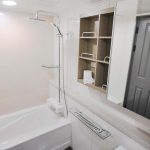


Renovation choices in bathrooms are moving more toward durability and moisture protection options than on appearance choices. There is a recurrence of exposure to water, steam and change of temperature in shower and tub areas.
Choosing tub and shower walls are a significant component in the management of moisture and safeguarding the surrounding construction. Appropriate wall systems protect framing, insulation and finish by the long-term effects.
They also promote the quality of the indoor air. Well thought-out planning minimizes the future maintenance requirements. Educated decisions result in reliable performance in the bathroom.
Wetness Resistance Problems
The degree of humidity within the shower and tub looks is high during the daily functioning. Wall structures should not allow the penetration of water behind the final wall surfaces. Even a small amount of moisture intrusion may destroy studs and insulation with time.
Perforated waterproof barriers are more reliable than the piecemeal ones. The minimization of seams minimizes the chances of sealant failure. Corner and transition protection is important to enhance the total security.
Wet environment materials can withstand long-term exposure to humidity. Lack of moisture resistance promotes the growth of mold in the wall cavities. Structural integrity is maintained by dependable moisture management.
The Performance Standards Of Materials
The choice of materials has a direct effect on life and longevity. The case of nonporous materials avoids absorption of water and swelling of the surface. Compact construction enhances cracking and deformation strength.
Equal thickness facilitates correct alignment in the course of installation. Good finishes can withstand cleaning chemicals on a regular basis. Poor quality of materials turns brown or loses strength when exposed to moisture over a long period.
Smoothness of manufacturing enhances coherence in manufacturing. Rigid panels are used to hold non-flexible mounted fixtures. The use of proven materials will guarantee long term predictable performance.
The Significance Of The Installation Accuracy
The quality of installation is what sets the wall systems in place to work as desired. The preparation of the substrate should be able to offer flat and stable mounting surfaces. Lack of even support causes stress points.
Sealants are used to prevent any leakages by joints and plumbing penetrations. Shower and tub walls installed by professionals ensure watertightness throughout the usage. The installation of fasteners should be according to the demands of the manufacturer.
Warranties are often voided due to errors during installation. Experts install them so that there is a minimal chance of expensive re-work in future. Honesty secures the investment in the renovation on the long term.
Factors Of Efficiency In Maintenance
The satisfaction of the homeowners is heavily dependent on maintenance requirements. The wall surfaces are smooth making it easy to clean them on a regular basis. Grout free designs limit the growth of molds and mildews.
Resistant created finishes are chemical resistant and therefore maintain the appearance of the surface. Rough surfaces hold debris and augment the cleaning operation. Low maintenance systems promote regular hygiene measures.
Less maintenance reduces the overhead ownership expenses. Stain and color resistant durable coats. Careless solutions can accommodate the busy timetable of the household. The maintenance practice enhances the daily use of the bathroom.
Concerns Of Design Integration
Wall systems need to be incorporated with tubs, fixtures and floors. The thickness of a panel influences the alignment of the trim and plumbing transitions. The effect of seam placement is that it affects visual continuity between surfaces.
Psychologically neutral finishes are long term design flexible. The patterns can be too complicated to allow future attraction. Equal proportions are appropriate in bathrooms of different sizes.
The compatibility prevents the installation conflicts during renovation. Co-ordinated materials provide quality. Considered assimilation promotes comfort and utility. The decision of design must be favorable to performance.
Conclusion
The choice of bathroom walls has a direct impact on the durability, safety and long-term value. The most significant is the moisture resistance. The quality of materials defines stability and required life.
Proper installation eliminates leakages and untimely breakdowns. Cleanliness and comfort are enhanced through efficiency in maintenance. The overall bathroom cohesion is improved with the help of visual integration.
Performance based planning minimizes risks of repairs. Informed appraisals are to the benefit of the homeowners. Structural elements that are not visible are safeguarded using reliable wall systems.